Sustainable Infrastructure Insurance for Green Energy Projects: Safeguarding the Renewable Transition

Introduction
The global transition toward a low-carbon economy has accelerated at an unprecedented pace. As nations strive to meet net-zero carbon emission targets, the deployment of renewable energy technologies—ranging from utility-scale solar arrays and offshore wind farms to battery energy storage systems (BESS) and green hydrogen facilities—has transitioned from a niche environmental endeavor to a mainstream economic imperative. However, mobilizing the trillions of dollars in capital required for this transition hinges on a critical, yet often overlooked, component of the financial ecosystem: sustainable infrastructure insurance for green energy projects.
Without robust risk-transfer mechanisms, institutional investors, commercial banks, and developers would find the risk profiles of these massive, capital-intensive projects prohibitively high. Sustainable infrastructure insurance serves as the financial bedrock, transforming high-risk green ventures into bankable, resilient assets. This comprehensive guide explores the evolving landscape of sustainable infrastructure insurance for green energy projects, examining the unique risks associated with clean energy technologies, modern underwriting methodologies, and the strategic importance of tailored insurance solutions in securing our collective ecological and financial future.
The Changing Landscape of Renewable Energy Risks
Traditional infrastructure projects, such as coal-fired power plants or natural gas pipelines, benefit from decades of historical actuarial data. Insurers understand their failure modes, operational lifespans, and supply chain vulnerabilities intimately. In contrast, the rapid evolution of green energy technologies presents a highly dynamic risk landscape.
Green energy assets are inherently exposed to unique operational and environmental hazards. For instance, solar power plants are highly susceptible to localized weather events such as severe hailstorms, wildfires, and flash floods. Offshore wind installations operate in incredibly harsh marine environments, facing risks of turbine degradation, salt-water corrosion, submarine cable damage, and catastrophic storms. Furthermore, emerging technologies like Battery Energy Storage Systems (BESS) carry thermal runaway risks, which require highly specialized fire safety and liability coverages.
To manage these complexities, risk managers must deploy a sophisticated framework of sustainable infrastructure insurance for green energy projects that addresses both physical asset protection and revenue generation stability.
[IMAGE_PROMPT: A wide-angle, high-resolution photograph of an offshore wind farm during sunset, with a subtle overlay of digital data lines symbolizing risk analysis and financial security.]
Understanding the Core Components of Green Energy Insurance
Sustainable infrastructure insurance is not a monolithic product; rather, it is a highly customized suite of coverages designed to address specific risk phases—from planning and construction to operation and decommissioning.
1. Construction All Risks (CAR) / Erection All Risks (EAR)
This coverage is vital during the initial phases of a project. It protects against physical damage to materials, machinery, and equipment during transit, on-site storage, and installation. For green projects, CAR/EAR insurance often includes coverage for ‘Delay in Start-Up’ (DSU), which compensates developers for lost revenue and debt service obligations if a construction mishap delays the commercial operation date.
2. Operational All Risks (OAR)
Once a green energy project is commissioned, OAR insurance takes over. This covers physical loss or damage to the operating assets due to natural perils, machinery breakdown, or human error. Crucially, it is paired with Business Interruption (BI) insurance, which covers lost income when an insured physical loss halts energy generation.
3. Specialized Liability Coverages
As renewable installations integrate deeper into the public grid and local communities, third-party liability becomes a major consideration. This includes environmental liability (e.g., contamination from BESS thermal runaway events) and general commercial liability.
To illustrate how these risks and insurance solutions differ across various clean energy sectors, consider the following comparative analysis:
| Green Energy Technology | Primary Operational & Natural Risks | Essential Insurance Solutions | Specialized Coverages Required |
|---|---|---|---|
| Utility-Scale Solar PV | Hailstorms, windstorms, wildfire, inverter failure, theft | Property Damage (PD), Business Interruption (BI) | Parametric weather index insurance, soil erosion coverage |
| Offshore Wind Power | Marine collisions, submarine cable damage, severe storms, turbine degradation | Marine Cargo, Operational All Risks (OAR) | Delay in Start-Up (DSU), serial defects liability, vessel charter cover |
| Battery Energy Storage (BESS) | Thermal runaway, chemical fires, rapid degradation, grid integration failure | Commercial General Liability, Property Damage | Performance warranty insurance, business interruption due to grid outage |
| Green Hydrogen Facilities | High-pressure explosions, hydrogen embrittlement, complex supply chain delays | Machinery Breakdown, Business Interruption | Environmental liability, advanced technology warranty insurance |
The Role of ESG and Sustainable Underwriting
Today, the underwriting of sustainable infrastructure insurance for green energy projects is deeply intertwined with Environmental, Social, and Governance (ESG) criteria. Top-tier global insurance and reinsurance companies are no longer just passive risk-takers; they are active facilitators of the transition to a net-zero economy.
By integrating ESG metrics into their underwriting guidelines, insurers can incentivize developers to adopt safer, more sustainable engineering and operational practices. For example, a solar project developer utilizing eco-friendly, highly durable dual-glass solar modules that resist hail damage may secure lower premium rates than a developer opting for cheaper, more fragile components. This creates a positive feedback loop, raising the overall engineering standard of the renewable energy sector.
“Sustainable infrastructure insurance is not merely a risk-transfer mechanism; it is the financial scaffolding upon which the global transition to clean energy is built. Without robust risk mitigation, the capital flows required to meet global climate targets will simply dry up.”
Key Challenges in Underwriting Sustainable Infrastructure
Despite its strategic importance, the market for sustainable infrastructure insurance for green energy projects faces several headwinds:
Lack of Actuarial Historical Data
Unlike traditional fossil-fuel energy systems, many renewable energy technologies have only been deployed at scale for a decade or two. Technologies like utility-scale green hydrogen production or deep-water floating offshore wind are still in their infancy. This lack of historical data makes it challenging for actuaries to price risks accurately, occasionally leading to volatile premium rates or capacity constraints in the insurance market.
The Volatility of Climate Change
Ironically, the very assets designed to combat climate change are highly vulnerable to its consequences. The increasing frequency and severity of extreme weather events—such as unprecedented hailstorms in Texas damaging solar farms, or severe droughts limiting hydroelectric output—pose a significant challenge to insurers. Underwriters must continuously update their catastrophe modeling to reflect a changing, less predictable climate.
Technology Obsolescence and Serial Defects
As green energy technologies evolve rapidly, developers are deploying larger, more efficient wind turbines and higher-capacity battery systems. However, these newer models often lack long-term operational track records. If a specific component suffers from a systemic design flaw (a serial defect), it can lead to massive, multi-million-dollar claims across multiple projects simultaneously.
Future Trends: Parametric Insurance and Digitalization
To overcome these challenges, the insurance industry is embracing cutting-edge innovations. The most prominent among these is parametric (or index-based) insurance.
Unlike traditional indemnity insurance, which requires a lengthy and complex physical damage assessment before a claim is paid, parametric insurance pays out automatically when a pre-defined environmental parameter is met. For instance, a solar farm developer can purchase parametric insurance against “lack of sun” (solar irradiance deficiency). If satellite data shows that solar irradiance fell below a specific threshold during a quarter, the insurer issues a payout immediately, protecting the project’s cash flow. Similarly, wind farms can secure parametric policies to protect against both excess wind (which forces turbines to shut down to prevent damage) and lack of wind (which reduces power generation).
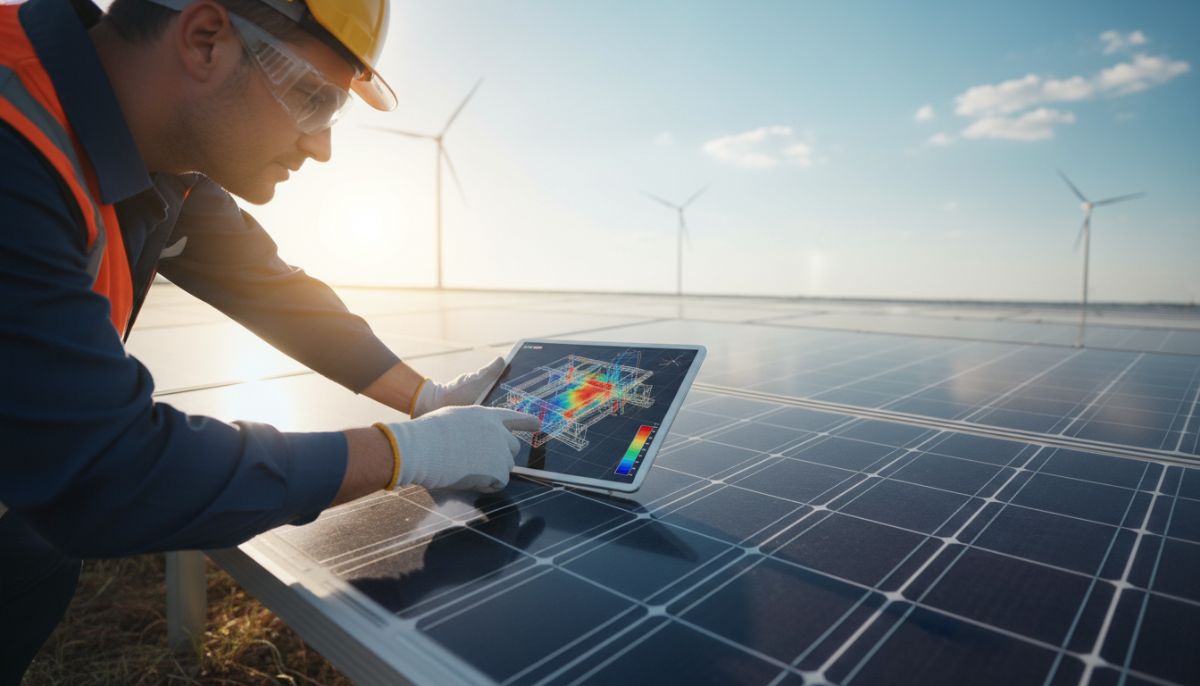
Additionally, the integration of Internet of Things (IoT) sensors, real-time SCADA system monitoring, and predictive AI analytics allows insurers to monitor the health of green infrastructure in real time. This proactive approach enables early risk detection, preventing minor mechanical glitches from escalating into catastrophic losses.
[IMAGE_PROMPT: An aerial view of a modern green hydrogen facility integrated with nearby wind turbines, showcasing clean technology architecture and a secure industrial environment.]
Conclusion: The Path Forward
The successful transition to a decarbonized global economy requires more than just political will and technological breakthrough; it demands financial resilience. As green energy projects grow in size, complexity, and geographic diversity, the demand for sophisticated sustainable infrastructure insurance for green energy projects will only intensify.
By bridging the gap between risk and capital, the insurance industry acts as a crucial enabler of clean energy progress. Developers, financial institutions, and insurers must collaborate closely to design innovative, data-driven coverage solutions. Through robust risk management, sustainable underwriting, and technological adaptation, we can ensure that the infrastructure driving our green future remains secure, profitable, and resilient against all challenges.